




WD-40 Specialist Electric Contact Cleaner with Smart Straw: A Closer Look
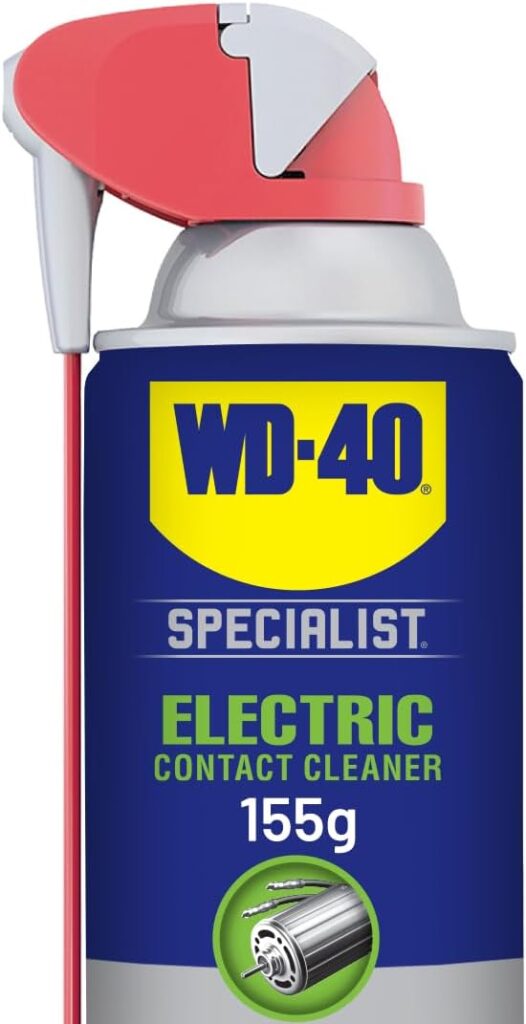
Electronics and electrical equipment accumulate contaminants in ways that are easy to overlook. Oil films, dust, flux residue left behind from soldering, and condensation can all find their way onto sensitive components, and once they are there, they can interfere with the way a device behaves. WD-40 Specialist Electric Contact Cleaner with Smart Straw is a spray product built specifically for this kind of maintenance work. Rather than being a general-purpose cleaner, it is positioned as an industrial-strength solution aimed at sensitive electronics and electrical equipment, and it comes with a delivery system designed to handle both narrow and wide applications.
This review looks at what the product is stated to do, how it is meant to be used, and where it fits into a maintenance routine. Everything discussed here is based on the manufacturer’s stated information, including the testing references provided for contaminant removal and surface compatibility.
Design and Delivery System
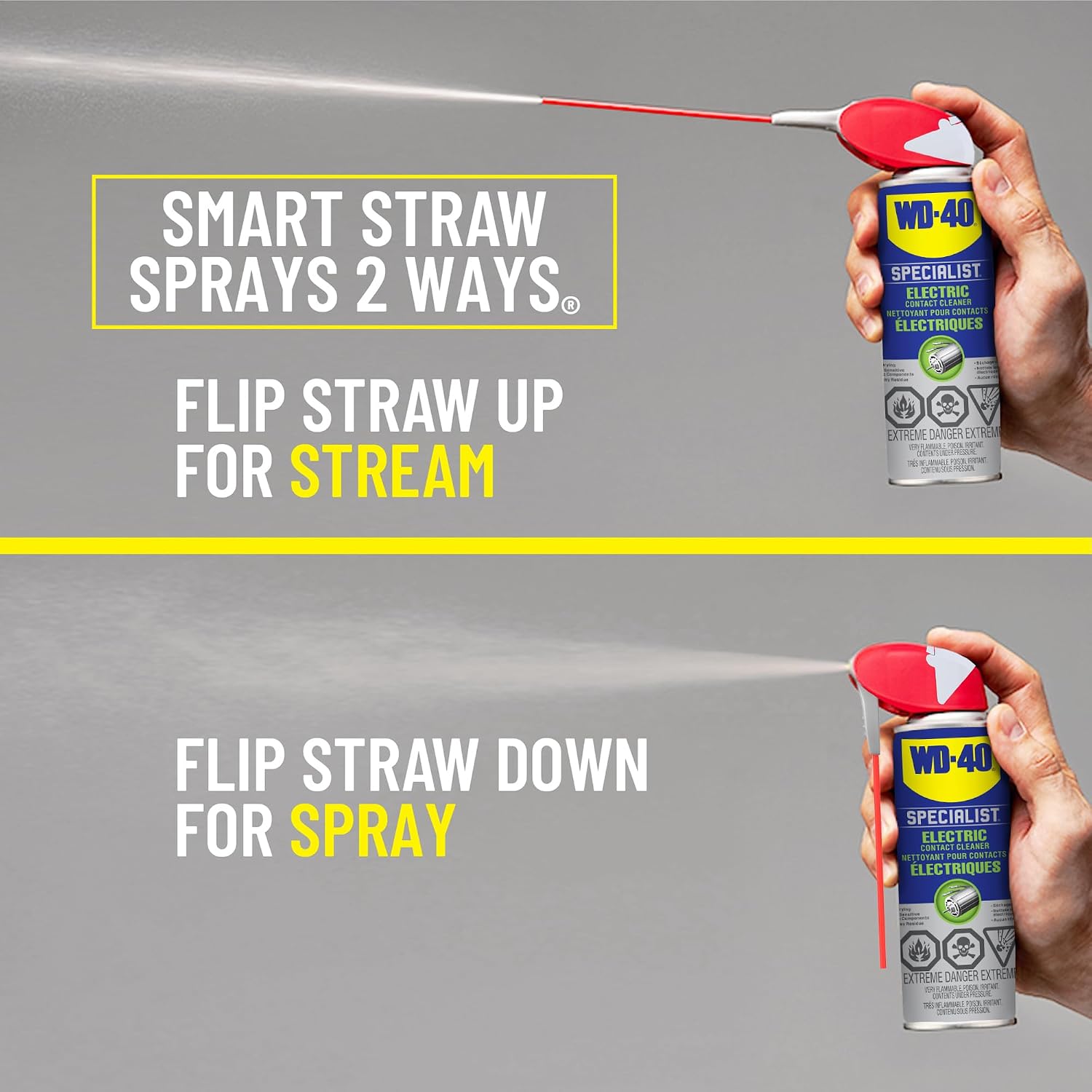
The most distinctive physical feature of this product is the Smart Straw. It is a permanently attached straw, which means there is no separate tube to lose or misplace between jobs. The straw is designed to spray two ways: a focused stream for precise application, and a broader spray pattern when wider coverage is needed. That dual capability matters in practice because electrical maintenance rarely involves only one type of surface. A single switch contact might call for a targeted burst, while a larger electric panel or a printed circuit board might benefit from broader coverage across a wider area.
Because the straw stays attached to the can, switching between the two spray modes is a matter of adjusting the straw rather than hunting for a loose accessory. The product is supplied in a can format with dimensions listed at approximately 5.41 x 5.41 x 17.45 cm and a weight of 240 g. It is manufactured by the WD-40 Company (Canada) Ltd., with the country of origin listed as the USA, and it carries the item model number 01288.
Features and Technology
The core of this product is a solvent blend. According to the manufacturer, that blend is safe on most plastics and metal parts, though the guidance is specific: test on plastic before using, and avoid adhesives, device screens, and keyboards. That instruction is worth taking seriously. “Most plastics” is not the same as “all plastics,” and the manufacturer’s own recommendation to test first reflects that distinction. The exclusions are equally clear — adhesives, screens, and keyboards are not intended targets for this cleaner.
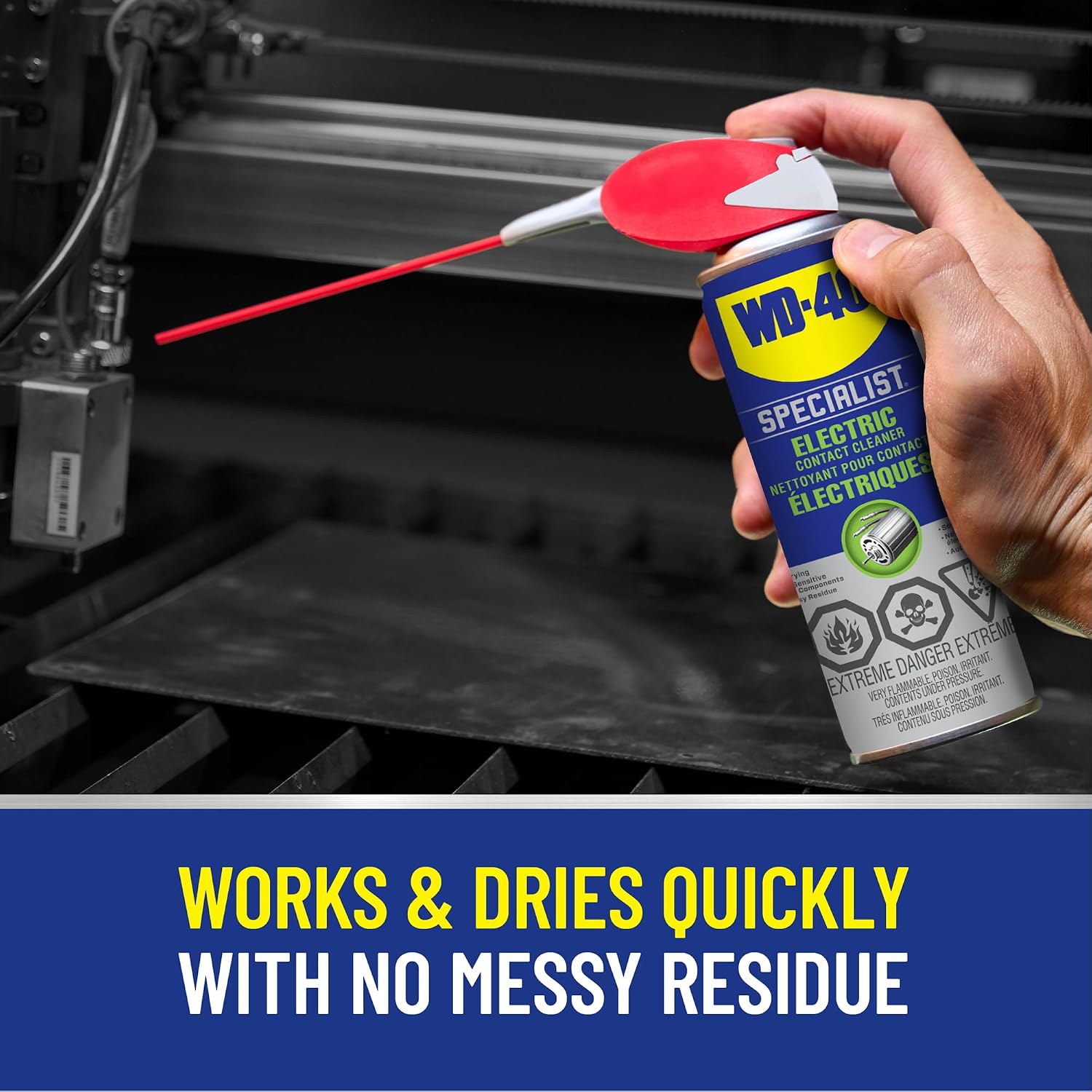
The formulation is described as leaving no residue. It goes on clean, dries quickly, and is stated to leave nothing behind. For electronics work, that characteristic is central to the product’s purpose. A cleaner that lingered on a circuit board or left an oily film would defeat the point of cleaning it in the first place. The manufacturer frames the no-residue behavior as contributing to optimal performance.
On the question of effectiveness, WD-40 states that the solvent blend removes over 95% of common surface contaminants. That figure is tied to a specific test reference: Sterling Laboratories in Toledo, Ohio, using ASTM D4488, with a test date of August 2018. Separately, a surface compatibility test is attributed to UL in Canton, Massachusetts, dated July 2018. These references give the claims a defined basis, though they remain manufacturer-supplied test results rather than independent verification.
Performance and Everyday Experience
The product is described as blasting away oil, dirt, flux residue, and condensation. Those four categories cover a lot of what actually accumulates on electrical equipment. Oil and dirt are common in automotive and workshop environments. Flux residue is a specific concern for anyone working with soldered connections, such as on printed circuit boards. Condensation is a recurring issue in equipment exposed to temperature swings or humid conditions.
The combination of a fast-drying, no-residue formula and a dual-mode straw shapes how the product is likely to be used. A quick, directed spray can address a specific contact or terminal, while a broader pass can cover a larger board or panel. Because the product dries quickly and is stated to leave no residue, it does not require a separate wiping or rinsing step in the way some cleaners might — though the manufacturer’s caution about testing on plastic and avoiding certain surfaces still applies.
It is worth noting what the product is not positioned to do. It is not described as a lubricant, a protectant, or a corrosion inhibitor. It is a cleaner, and its stated job is removing contaminants from sensitive electronics and equipment. The WD-40 brand overall spans multi-use products, specialist penetrating oils, lubricants, cleaners, and rust-related solutions, but this particular item sits firmly in the cleaner category.
Applications and Compatibility
The manufacturer lists a range of intended applications: printed circuit boards, controls, battery terminals, switches, precision instruments, and electric panels. These are all areas where oil, dirt, flux residue, or condensation can build up and where a no-residue cleaner makes practical sense.
Compatibility guidance is where the product requires the most care. The solvent blend is stated to be safe on most plastics and metal parts, but the manufacturer explicitly advises testing on plastic before use and avoiding adhesives, device screens, and keyboards. There is also a general instruction to always check with the manufacturer before performing maintenance on devices. That last point is a sensible precaution for anything under warranty or with specific servicing requirements.
Because the product is a spray, ventilation and normal handling precautions for solvent-based cleaners would be reasonable to observe, though the supplied information does not detail specific safety instructions beyond the surface guidance noted above.
Who Is This Product Best For?
Based on the stated applications, this contact cleaner is suited to people who maintain electrical and electronic equipment. That includes anyone servicing printed circuit boards, working with switches and controls, maintaining battery terminals, or looking after precision instruments and electric panels. The industrial-strength positioning and the listed applications suggest it is aimed at practical maintenance work rather than casual household cleaning.
It is also a reasonable fit for users who value the Smart Straw design, since the permanently attached straw removes the hassle of keeping track of a separate tube and allows both precise and broad application from the same can. Conversely, anyone hoping to clean device screens, keyboards, or areas with adhesives should look elsewhere, since the manufacturer specifically advises against those uses.
Final Verdict
WD-40 Specialist Electric Contact Cleaner with Smart Straw is a focused product with a clear purpose: removing oil, dirt, flux residue, and condensation from sensitive electronics and electrical equipment. Its key attributes — a solvent blend stated to be safe on most plastics and metal parts, a no-residue, fast-drying formula, and the dual-mode Smart Straw — line up well with that purpose. The manufacturer’s claim of removing over 95% of common surface contaminants is backed by a cited test reference, and the surface compatibility guidance is documented as well.
The product is not without caveats. The “most plastics” wording and the instruction to test first mean users should not assume universal compatibility. The exclusions for adhesives, screens, and keyboards narrow its scope. And the recommendation to check with a device manufacturer before maintenance is a reminder that this is a product for considered use, not indiscriminate spraying. For the applications it is designed for — circuit boards, controls, terminals, switches, instruments, and panels — it presents a coherent, purpose-built option for electrical maintenance.