





Tiny Land Wooden Play Food for Kids Kitchen, Toddlers Toys Fruit Set Review
Play kitchens give children a space to imitate the everyday routines they see around them, and the accessories that fill those kitchens often shape how long the pretend play lasts. The Tiny Land Wooden Play Food for Kids Kitchen, Toddlers Toys Fruit Set is a play food collection built around seven recognizable fruits and vegetables, made from a mix of wood, cotton, and felt. Rather than offering a large pile of identical pieces, this set focuses on a smaller group of items chosen to look like real produce, supported by packaging that turns a simple food set into a market-style experience.
For parents browsing play food options, the appeal here is fairly specific. This is not a generic assortment of plastic shapes. It is a themed set with a stated educational angle, a stated material story, and a presentation designed to support role play. The details below explain what the set includes and what those details mean in practice.
Design and Materials
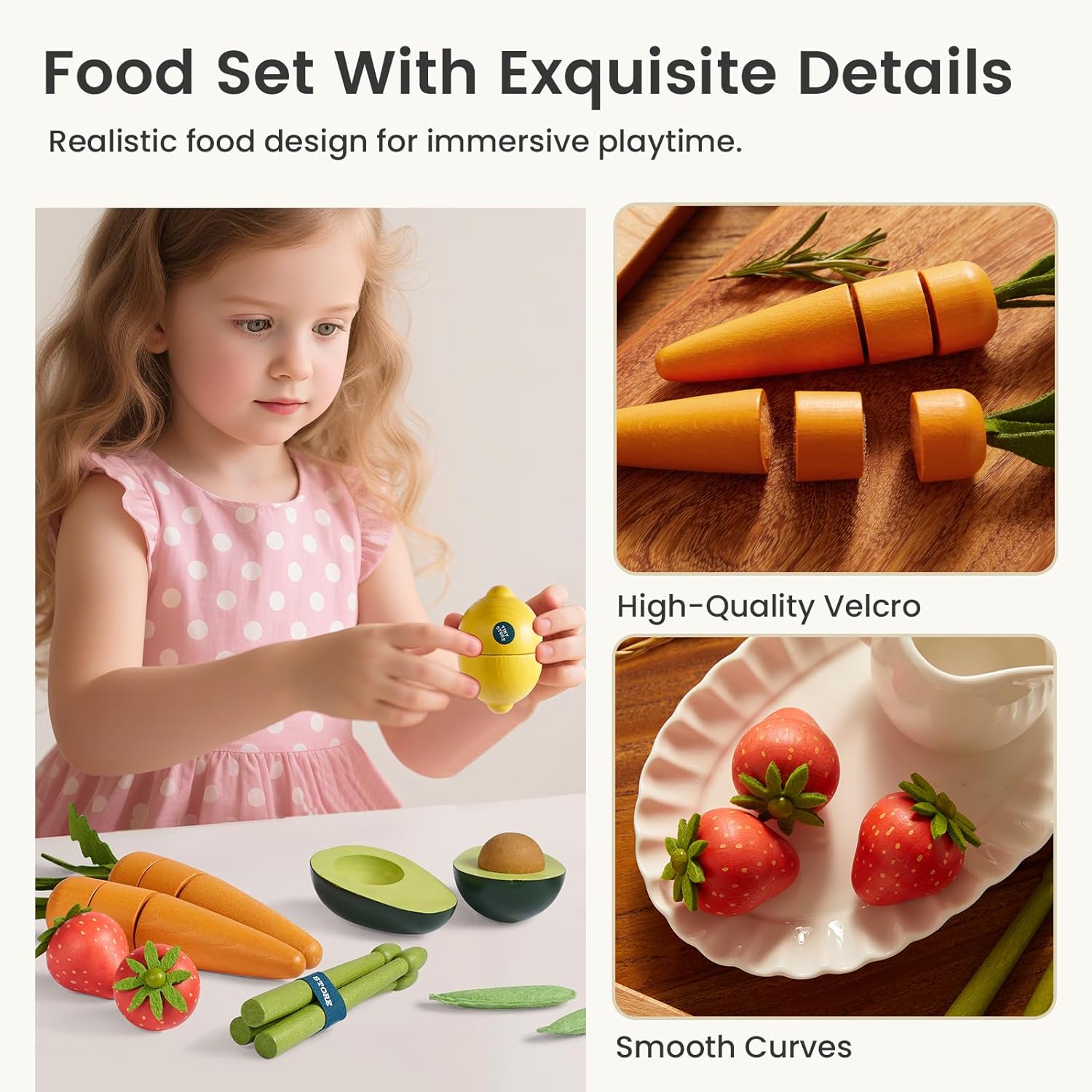
Tiny Land describes this set as crafted from natural solid wood, soft cotton, and felt. That combination of materials is worth noting because it produces a different play feel than molded plastic. The wood gives the pieces a solid, natural appearance, while the cotton and felt elements add soft textures. The stated result is a set that looks and feels more like a curated toy than a bulk bag of accessories.
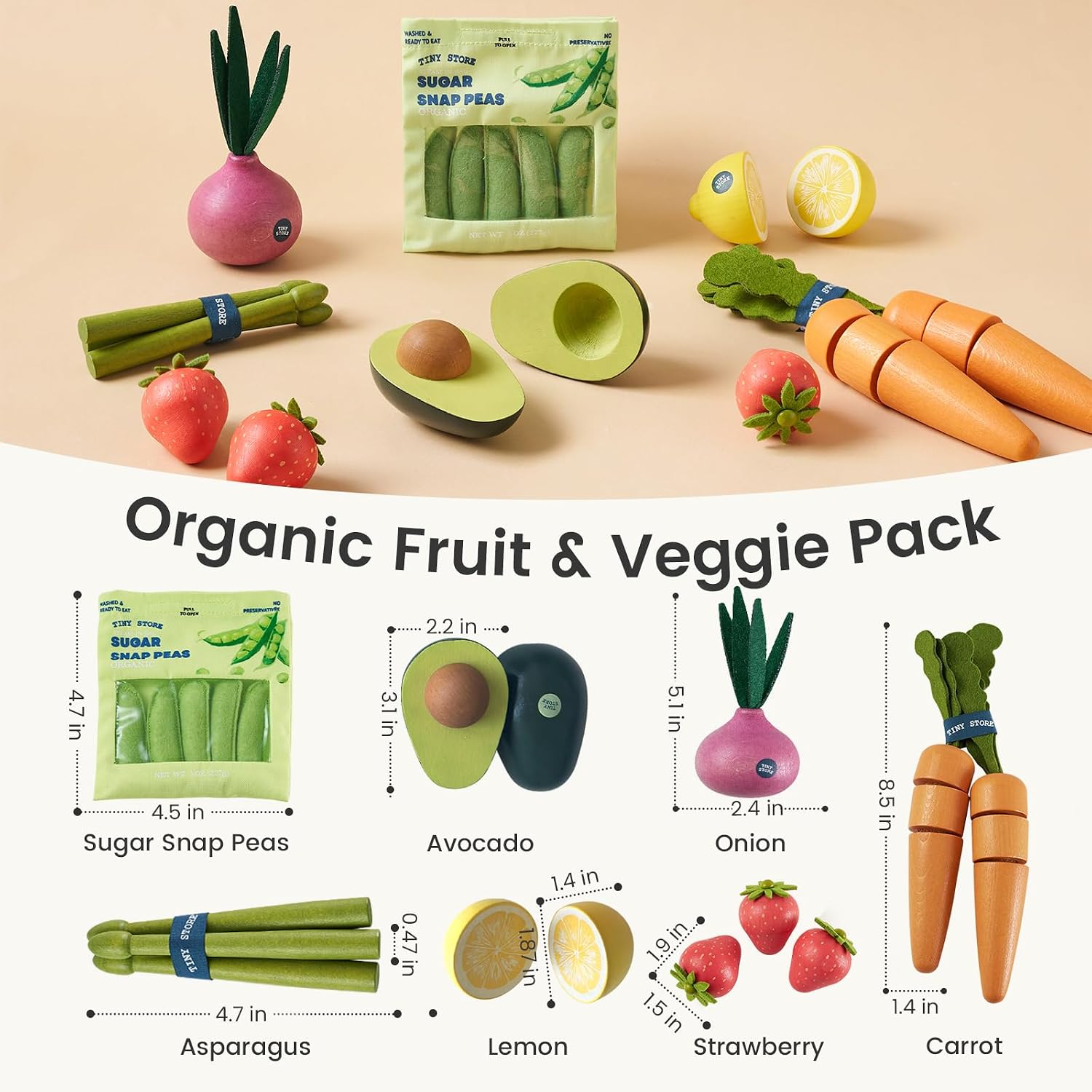
The design direction is described as stylish, with soft textures and natural colors. That palette tends to sit comfortably alongside wooden play kitchens and neutral playroom decor, rather than clashing with them. The set measures approximately 14.8 x 6.3 x 29.8 cm and weighs around 408 grams, so it is a compact, lightweight collection rather than a large bin of food. That size makes it easy to store near a play kitchen or tuck onto a shelf when playtime ends.
The manufacturer lists a recommended age range of 24 months to 10 years. That is a notably wide span. It suggests the set is intended to grow with a child rather than being outgrown quickly, moving from simple handling and naming at the toddler stage to more elaborate pretend scenarios for older children.
Features and Included Pieces
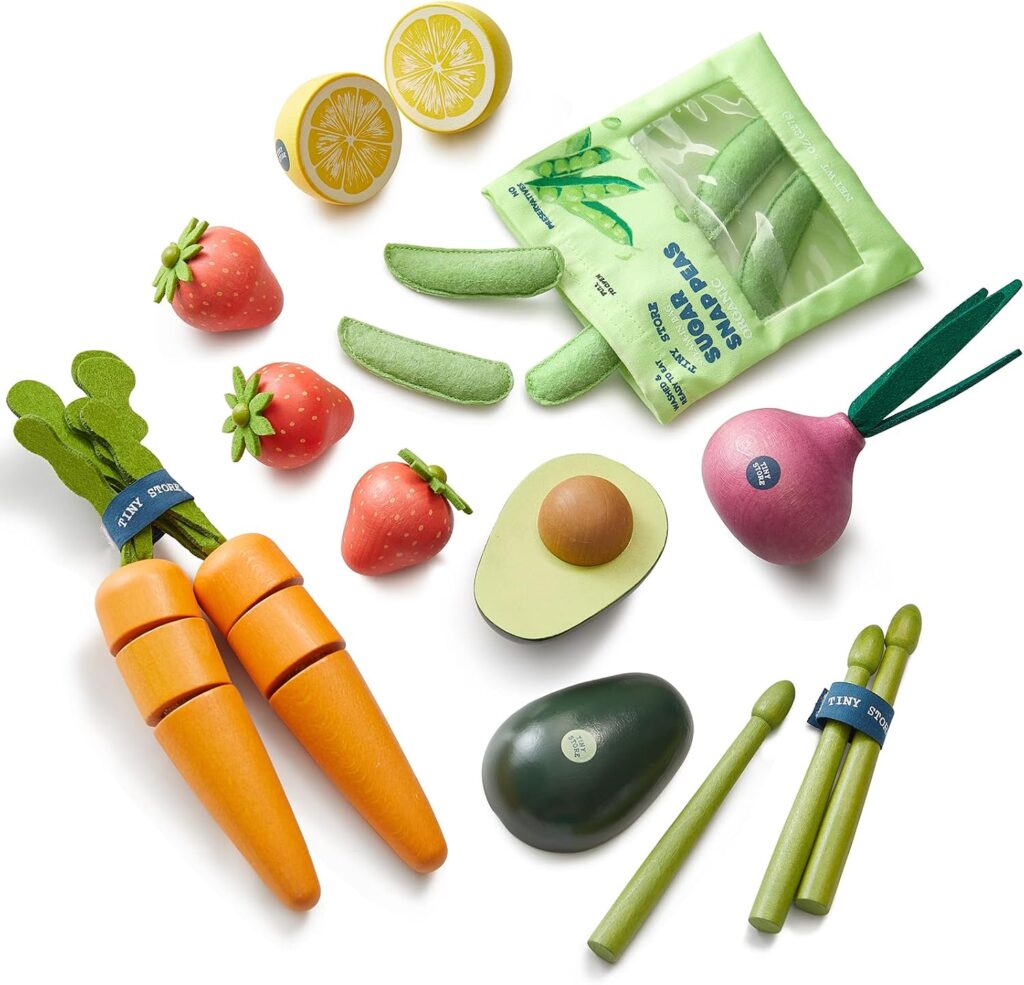
The core of the set is the seven realistic fruits and vegetables. According to the product information, these include an avocado, a lemon, an onion, carrots, asparagus, strawberries, and snap peas. The mix is deliberate: it combines familiar everyday items like carrots and strawberries with produce that children may encounter less often, such as asparagus and snap peas. That variety gives adults an easy opening to talk about different foods during play.
The set also includes market-inspired packaging. Specifically, it comes with a fruit crate and a veggie pouch. These are not just storage pieces. They are described as part of the play experience, supporting pretend shopping trips and market scenarios. A child can load the crate, fill the pouch, and act out buying and selling food, which adds a layer of narrative to what would otherwise be simple object play.
Tiny Land frames the set as Montessori-inspired. The stated goals are fine motor development, food education, and independent learning. In practical terms, that means the set is positioned for open-ended play rather than a single prescribed activity. Children can sort the produce, name it, pack it, unpack it, or use it in chef and shopping role play. Because the pieces are described as lifelike, they can also support conversations about healthy food choices, which the product information explicitly lists as a purpose of the set.
Performance and Everyday Play Experience
What stands out about this set is how much of its value comes from context rather than from any single piece. A play food item on its own is a small object. A crate, a pouch, and seven distinct produce pieces together create a small pretend market. That structure is what makes the set useful for role play, shopping games, and chef activities, all of which are named in the product information as intended uses.
The material mix also shapes the play experience. Wood pieces tend to feel substantial in the hand, while cotton and felt elements introduce a softer texture. For younger toddlers, that contrast can make handling and exploring the pieces more interesting. For older children, the realistic appearance of the produce supports more convincing pretend scenarios.
Because the set is compact and lightweight, it fits naturally into an existing play kitchen setup without taking over the space. It can also work as a standalone toy for children who enjoy sorting, packing, and unpacking. The stated durability of the materials is described by the manufacturer as built for long-lasting pretend kitchen adventures, which reflects the intended use rather than an independently verified result.
Compatibility and Suitability
This set is designed for play kitchens and similar pretend-play settings. It does not require batteries, assembly, or any electronic components, and there is no connectivity element to consider. Its suitability comes down to age, interest, and how a child likes to play.
The listed age range of 24 months to 10 years is broad, but the way a child engages with the set will naturally change across that span. Younger toddlers are likely to focus on handling, naming, and simple packing. Preschoolers may gravitate toward shopping and market scenarios using the crate and pouch. Older children within the stated range may incorporate the produce into more complex storytelling or chef role play.
Who Is This Product Best For
This set is a reasonable fit for families who already have a play kitchen and want accessories that match a natural, wood-toned aesthetic. The combination of wood, cotton, and felt, along with the soft natural color palette, makes it a natural companion to wooden kitchen setups.
It also suits parents looking for play food with an educational angle. The stated Montessori-inspired design, the food education focus, and the inclusion of seven distinct produce items all point toward a set that is meant to prompt conversation and learning alongside play.
Finally, it works well for gift-givers. The product information describes it as a gift for birthdays or holidays, aimed at little chefs and curious minds. The market-style crate and pouch give the set a finished, presentable quality that makes it feel like more than a loose collection of pieces.
Final Verdict
The Tiny Land Wooden Play Food for Kids Kitchen, Toddlers Toys Fruit Set is a focused play food collection rather than a sprawling assortment. Its strengths lie in the specific choices it makes: seven recognizable fruits and vegetables, a mix of wood, cotton, and felt, market-inspired packaging with a crate and pouch, and a stated Montessori-inspired approach that supports fine motor development and food education.
The wide recommended age range of 24 months to 10 years gives it flexibility, and the compact size makes it easy to integrate into an existing play kitchen. Parents who want a natural-looking, texture-rich set that encourages pretend shopping and cooking scenarios will find a lot to work with here. Those looking for a large volume of play food pieces may prefer a broader set, since this one is intentionally curated around a smaller group of items. Taken as described, it is a thoughtful addition to a pretend kitchen, particularly for families who value open-ended, role-based play.