






SHOKZ OpenRun Bone Conduction Bluetooth Headphones: An Open-Ear Approach to Everyday Listening
Most headphones are built around a simple idea: seal the ear, block the world out, and deliver audio directly into the ear canal. The SHOKZ OpenRun takes the opposite approach. These are bone conduction Bluetooth headphones designed to leave the ear canal completely open, transmitting sound through vibrations rather than through traditional speaker drivers pressed against or inserted into the ear. For anyone who has ever felt uneasy running near traffic with earbuds in, or who simply dislikes the plugged-up feeling of in-ear models, that design difference is the entire point of the product.
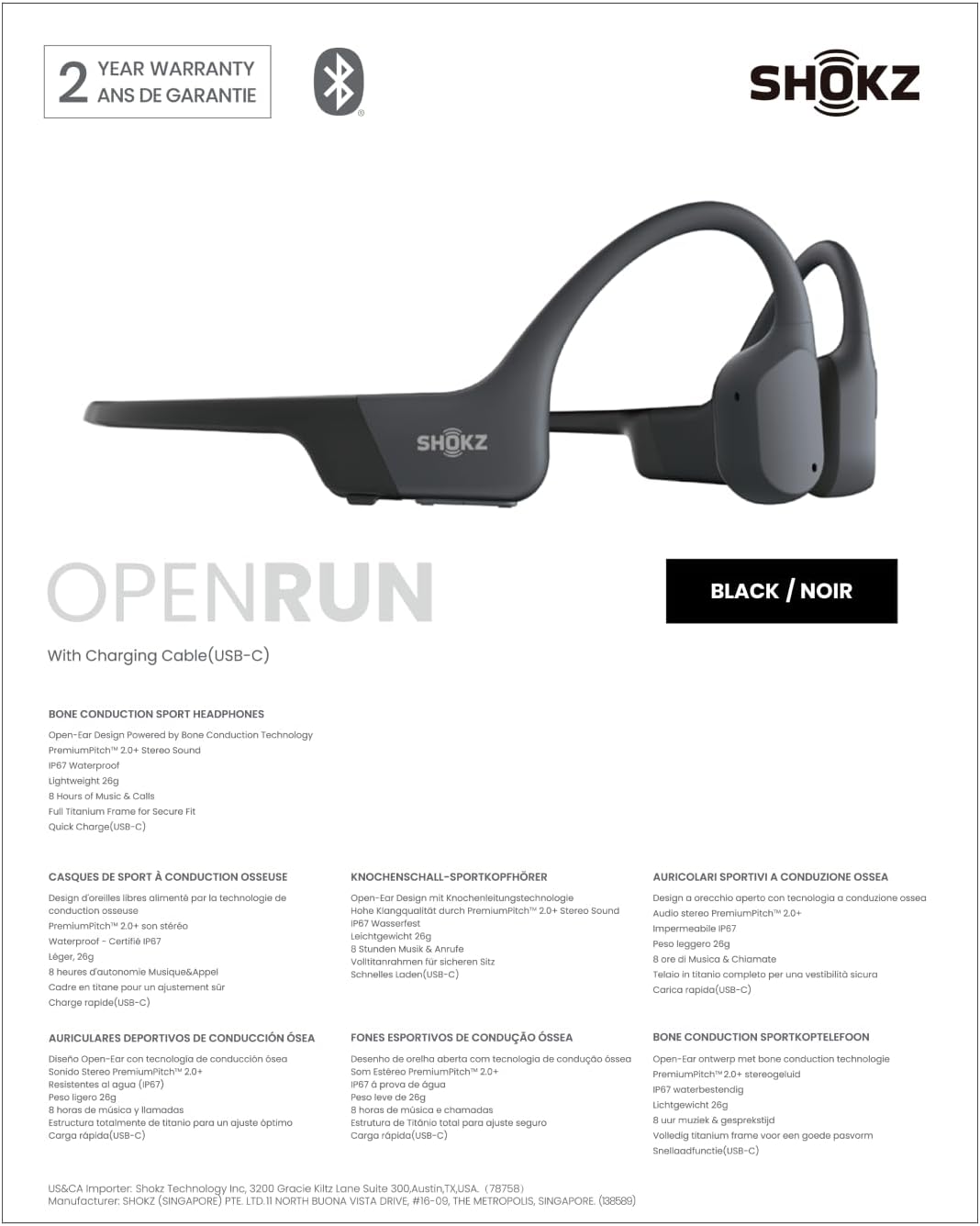
Shokz has been working in this space since 2011, when the company set out to bring bone conduction listening to a general audience. The OpenRun, listed here in black with USB-C charging, sits within that lineage and carries the model number S805. It is a Bluetooth headphone built for movement, and the way it is put together reflects that focus.
Design and Fit
The OpenRun uses a wraparound frame that Shokz describes as featherweight, with a wireless, open-ear fit intended for earbud-free listening. At 26.4 grams, the headphone is light enough that its weight is unlikely to be the thing you notice during a workout. The frame is designed to hook over the ears and sit against the head rather than inside it, which is what allows the open-ear configuration to work. A Shokz headband is included with the product.
Because nothing enters the ear canal, there is no ear tip to size, no seal to adjust, and no pressure building up inside the ear over long sessions. That is a meaningful difference for anyone who finds traditional earbuds uncomfortable after an hour or so, though comfort itself is a personal matter and the design is simply described here as it is stated. The wraparound shape also means the headphone stays positioned against the cheekbone, which is where bone conduction transmission happens.
Bone Conduction Technology and Open-Ear Listening
The core of the OpenRun is its 8th generation bone conduction technology. Instead of pushing air into the ear, the headphone uses vibrations to transmit sound through the cheekbone directly to the inner ear. Shokz describes this as delivering quality audio while leaving the eardrums open to surroundings.
The practical consequence of that open design is situational awareness. With nothing blocking the ear canal, ambient sound — traffic, other runners, announcements, a training partner’s voice — remains audible alongside whatever you are listening to. Shokz frames this as a safety benefit for workouts, and it is the clearest reason someone would choose bone conduction over a conventional pair of earbuds. It is worth being precise about what this means: the ears stay open, so outside sound is not physically blocked. How much of it you perceive in practice will depend on your environment and listening volume, but the design intent is transparency rather than isolation.
Water and Sweat Resistance
The OpenRun carries an IP67 waterproof rating, which Shokz describes as completely sweat and waterproof for workouts, fitness, and running. For a headphone aimed at exercise, that rating addresses the obvious concern of perspiration during a session, and it also means light rain is not an immediate problem.
There is an important limitation to note. Shokz states that the OpenRun is not suitable for swimming, so despite the IP67 rating, this is not a swim headphone. The company also includes a moisture detection alert as a safety feature for charging — a reminder that the charging contacts need to be dry before power is connected. That detail is worth taking seriously, since moisture around a charging port is exactly the kind of thing that shortens the life of portable electronics.
Battery Life and Charging
Shokz rates the OpenRun at eight continuous hours of music, calls, and podcasts. For most training sessions, commutes, and workdays, that figure covers a full stretch of use without needing a top-up in the middle.
The headphone also supports a quick charge feature: ten minutes of charging provides up to 1.5 hours of battery life. That is the kind of specification that matters on the way out the door when the battery is low and there is no time for a full charge cycle. The OpenRun ships with a lithium polymer battery included, and this version charges over USB-C, which is the widely used reversible connector found on most current phones, laptops, and power banks. The product is listed as the quick charge version of the Aftershokz Aeropex.
Connectivity and Everyday Use
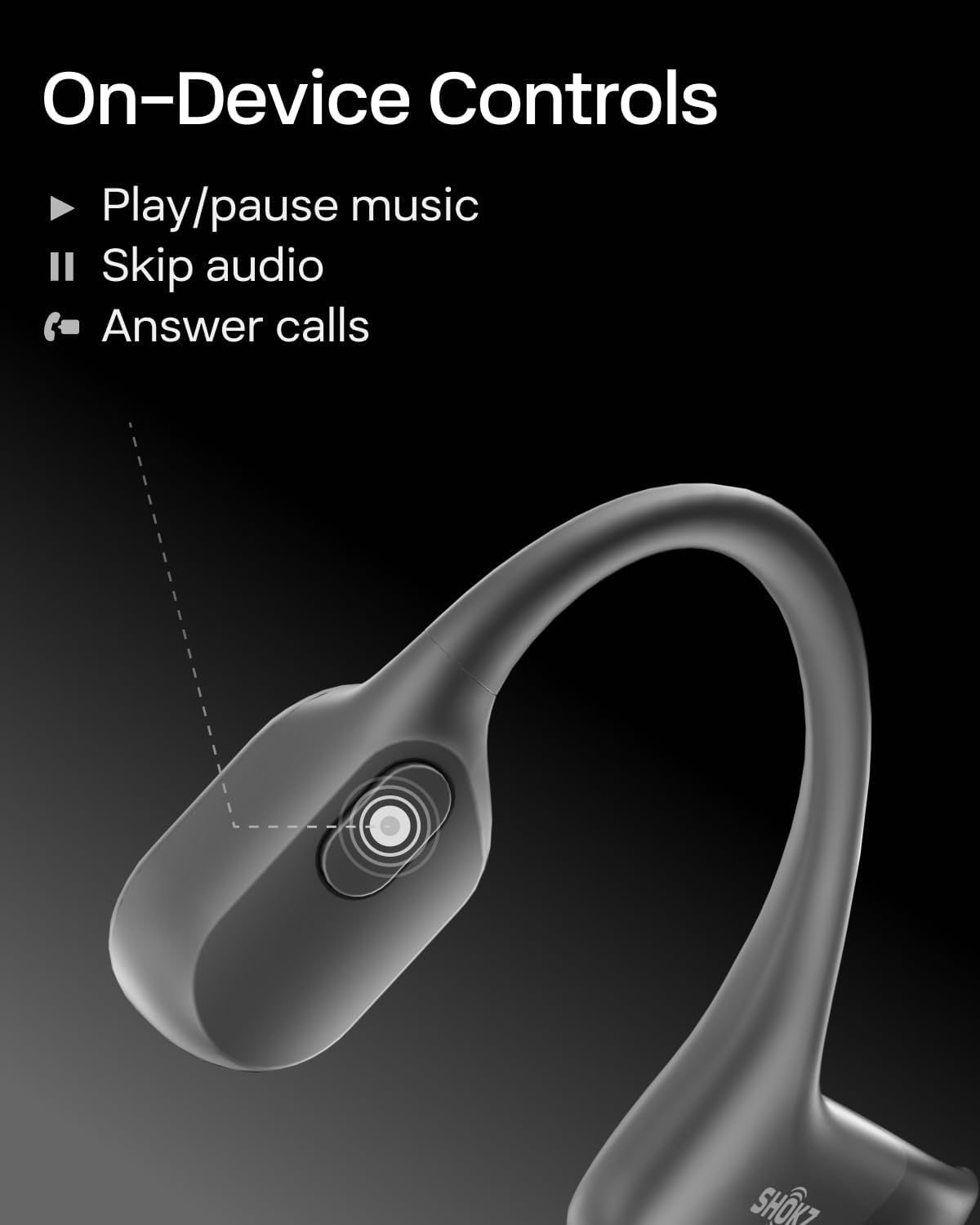
The OpenRun connects over Bluetooth, which is what allows it to pair with a phone or other Bluetooth source without a cable running to your pocket. Shokz positions it for music, calls, and podcasts, so it is intended to handle both listening and voice communication rather than audio playback alone.
Because the ear canal stays open, the OpenRun is not designed to deliver the isolation that in-ear or over-ear headphones provide. That is a trade-off built into the concept rather than a flaw: you gain awareness of your surroundings and lose the sealed-off immersion that comes with blocking outside noise. Anyone who wants to disappear into a mix on a noisy flight is looking at the wrong category of headphone. Anyone who wants to hear their music and the world at the same time is looking at the right one.
Who Is the SHOKZ OpenRun Best Suited For?
The OpenRun’s stated design and features point toward a fairly specific set of users:
- Runners and outdoor exercisers. The open-ear fit, sweat and waterproof rating, and emphasis on staying aware of surroundings all align with training outdoors, particularly near traffic or on shared paths.
- Cyclists and anyone moving through public spaces. Situational awareness is the central selling point of bone conduction, and it is most relevant where hearing your environment matters.
- People who dislike in-ear headphones. With no ear tips and nothing inserted into the canal, the OpenRun avoids the plugged-up sensation and the fit adjustments that come with traditional earbuds.
- Long-session listeners. Eight hours of rated playback and a wraparound frame suit extended use for podcasts, calls, and background audio.
- Users who want USB-C charging. This version uses the USB-C connector, which simplifies things for anyone already carrying USB-C cables.
It is less suited to anyone whose priority is maximum isolation or deep bass delivered through a sealed ear canal, and Shokz explicitly notes it should not be used for swimming.
Final Verdict
The SHOKZ OpenRun is a bone conduction Bluetooth headphone built around a deliberate trade-off. It gives up the sealed, isolated listening experience of conventional earbuds in exchange for an open ear that stays aware of its surroundings. Within that framework, the specification list is coherent: a 26.4-gram wraparound frame, 8th generation bone conduction technology, an IP67 waterproof rating with a moisture alert for charging, eight hours of rated playback, a ten-minute quick charge for up to 1.5 hours of use, and USB-C charging in this version.
The limitations are stated just as clearly. It is not a swimming headphone despite the waterproof rating, and it will not provide the noise blocking that some listeners expect. For runners, cyclists, and anyone who wants their ears left open while they listen, those are acceptable terms. For listeners who want to shut the world out, they are not. The OpenRun is a well-defined product for a well-defined purpose, and it makes sense for the people that purpose describes.


