



Digital Picture Frame, 10.1 Inch Picture Frame with 1280×800 HD IPS Touch Screen
A digital picture frame is one of those devices that quietly changes how a home displays its memories. Instead of printing a handful of photos and rotating them once a year, a connected frame can keep an entire gallery alive on a shelf or side table. The Digital Picture Frame from Linkdaze, model PF1007, is a 10.1-inch WiFi frame built around an HD IPS touchscreen, a generous amount of built-in storage, and an app-based sharing system called AiMOR. This review walks through what the supplied product information actually tells us about the frame, what each feature means in practice, and who it tends to suit.
Design and Display
The frame measures roughly 26.4 x 18 x 2.51 cm and weighs around 520 grams, which places it in the tabletop category rather than the wall-mounted one. That footprint is small enough to sit comfortably on a nightstand, mantel, or office desk without dominating the surface.
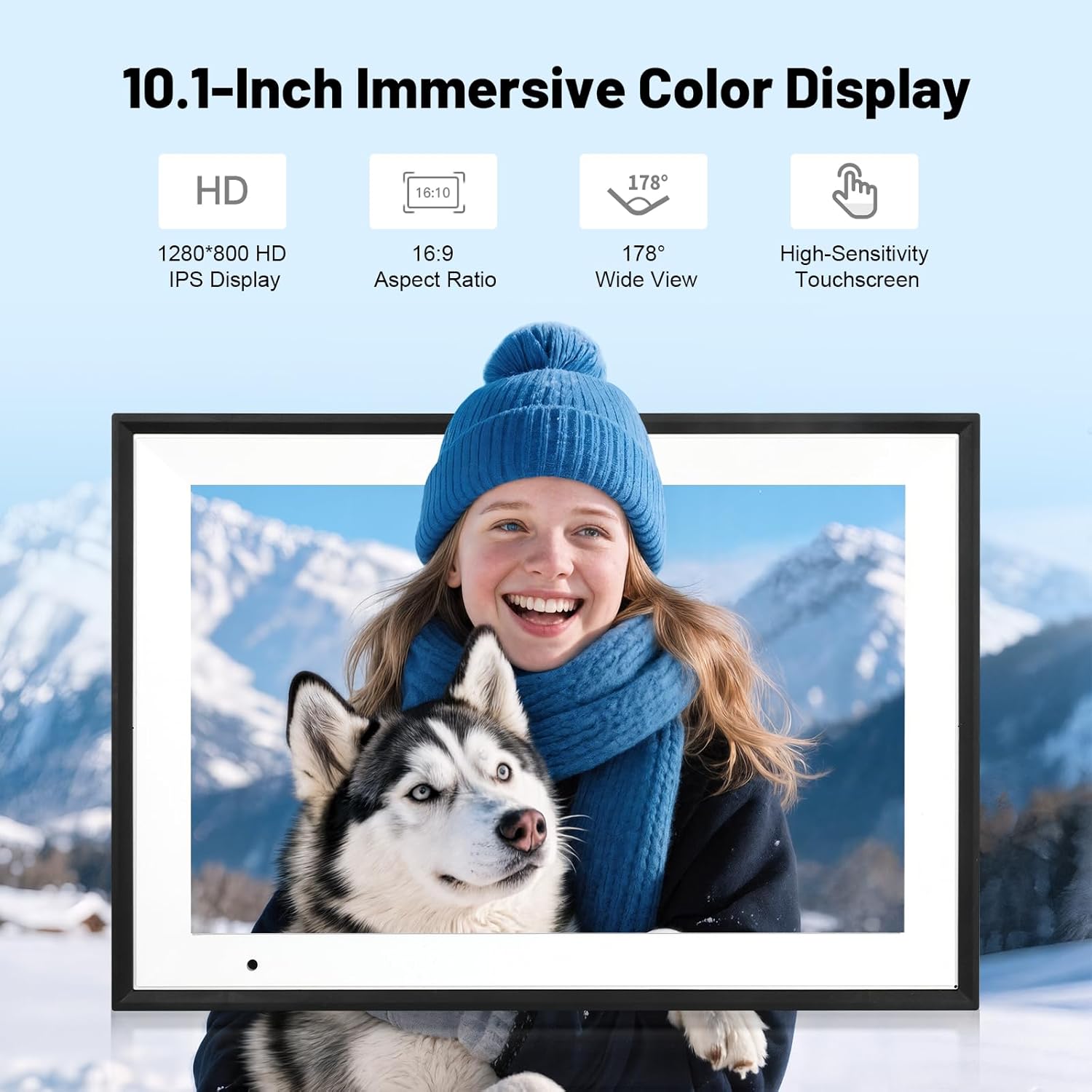
The centerpiece is a 10.1-inch IPS display with a 1280×800 resolution. IPS panels are known for maintaining consistent color and contrast when viewed from an angle, and the listing describes the screen as delivering vibrant visuals from any viewing angle, with advanced color accuracy intended to preserve the richness and detail of each photo. Those are stated product claims rather than measured results, but they describe the kind of viewing experience the panel is designed around. A touch layer sits over the display, and the listing notes that setup takes just minutes with intuitive touch controls, positioned as suitable for users of all ages and technical skill levels.
On the software side, the frame automatically rotates photos to match portrait or landscape orientation, and smart cropping adjusts images to fill the display. A built-in light sensor can automatically adjust screen brightness according to ambient light levels. Together, these features reduce the amount of manual fiddling required once the frame is up and running.
Features and Technology
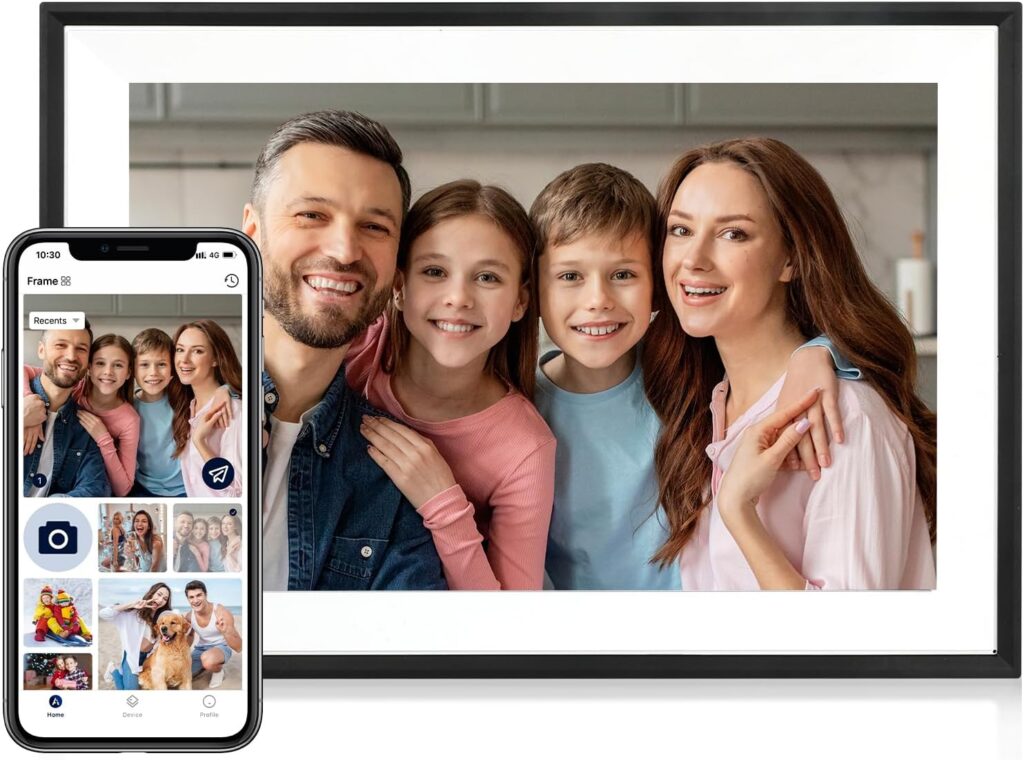
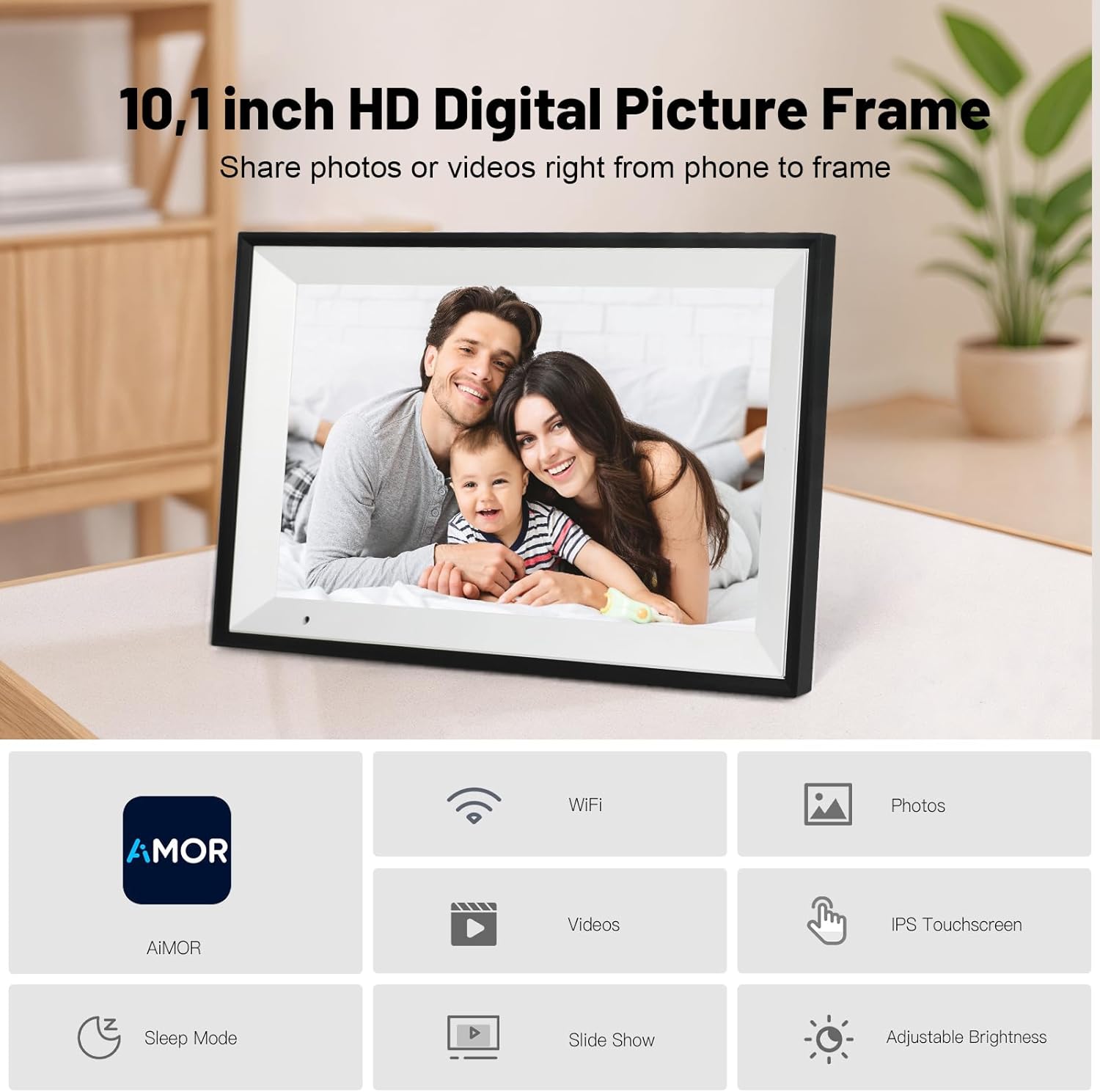
The headline feature is instant sharing through the AiMOR app. Once the frame is connected to WiFi, photos sent from the app appear on the display within seconds, according to the listing. The app also supports inviting an unlimited number of family members and friends to contribute, which turns the frame into a shared gallery rather than a single-person device. That structure is what separates a WiFi frame from a simpler SD-card model: the people contributing photos do not need physical access to the frame.
Video support extends the concept further. The frame handles MP4 files, and the listing frames video playback around 15-second clips, with the option to select a 15-second highlight reel when uploading anything longer. Videos with sound are positioned as a way to revisit moments as they were captured. For anyone who has ever tried to describe a child’s first steps in a still photo, the appeal of a short clip is fairly direct.
File format support covers JPG, JPEG, BMP, and PNG for images, alongside MP4 for video. Custom settings include slideshow behavior, brightness and volume adjustment, and a sleep mode. The sleep mode is a practical addition for a device that otherwise stays lit in a bedroom or living room.
Storage and Connectivity
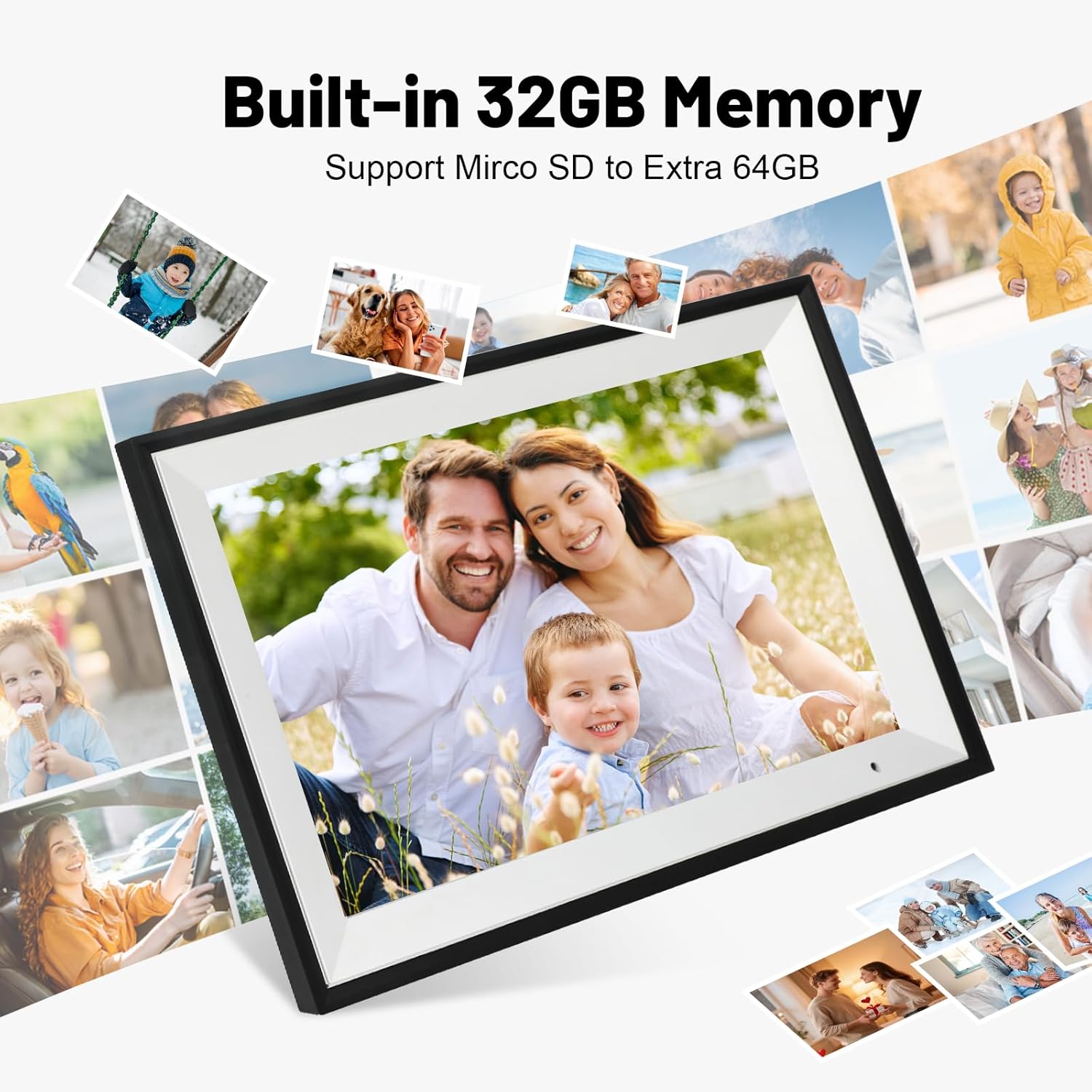
The frame includes 32GB of internal memory. The listing states this is enough to store over 50,000 photos directly on the device. Capacity can be expanded with Micro SD cards up to 64GB, which allows photos and videos to be uploaded or exported even without a WiFi connection.
One detail is worth flagging clearly, because it is easy to misunderstand: photos and videos cannot play directly from an SD card. They must first be imported into the frame. The card functions as transfer and backup space, not as a live playback source. Buyers who plan to rely on a card should factor that step into their workflow.
WiFi is the primary channel for receiving new content, and the AiMOR app is the tool for sending it. The frame is designed so that the people sharing photos do not need to be in the same room, or even the same country, as the frame itself.
Performance and Everyday Experience
In daily use, the combination of auto-rotate, smart cropping, and automatic brightness adjustment means the frame largely manages itself. Photos arrive, orient correctly, and display at a brightness suited to the room. The touchscreen handles navigation and settings changes without requiring a remote or a companion app for basic adjustments.
The 15-second video limit is the main constraint worth understanding before buying. Longer clips need to be trimmed to a highlight reel at upload, so the frame is better suited to short moments than to extended recordings. Within that boundary, the format works well for the kind of brief, spontaneous clips people tend to capture on a phone.
The 32GB of internal storage is generous for still photography. Even accounting for the fact that video files consume considerably more space than images, the stated capacity of over 50,000 photos leaves substantial headroom for most households.
Who Is This Product Best For?
The listing positions this frame around gift-giving, naming Mother’s Day, Father’s Day, weddings, Christmas, birthdays, graduations, and housewarmings as suitable occasions. The reasoning behind that positioning is straightforward: the frame is designed to be operated by people who may not want to manage file transfers or app settings themselves, since relatives and friends can push photos to it remotely through AiMOR.
That makes it a reasonable fit for a few specific situations:
- Households where family members live apart and want a shared, continuously updated photo display.
- Gifting to parents or grandparents, given the stated emphasis on simple touch operation and app-based sharing from the sender’s side.
- Anyone who wants a tabletop frame with enough internal storage to hold a large library without relying on external media.
- Users who want short video clips with sound alongside still photos, rather than a stills-only frame.
It is less suited to someone who wants to plug in a memory card and have it play automatically, since the frame requires importing files first, or to anyone needing to display video clips longer than 15 seconds without trimming them.
Final Verdict
The Linkdaze PF1007 digital picture frame covers the essentials of the modern WiFi frame category: a 10.1-inch HD IPS touchscreen at 1280×800, 32GB of internal storage, Micro SD expansion up to 64GB, automatic rotation and brightness adjustment, and app-based sharing through AiMOR with support for unlimited contributors. Video playback with sound, capped at 15-second clips, adds a dimension that stills-only frames cannot match.
The limitations are clearly stated rather than hidden. SD card content must be imported before it plays, and longer videos need to be trimmed to a highlight reel at upload. Neither is unusual for this type of device, but both shape how the frame is best used.
For anyone looking for a tabletop frame that lets far-flung family members contribute photos and short clips without technical hassle, this model’s feature set lines up well with that goal. Buyers who prefer a simpler card-based workflow, or who need to display longer video, should weigh those constraints before deciding.