
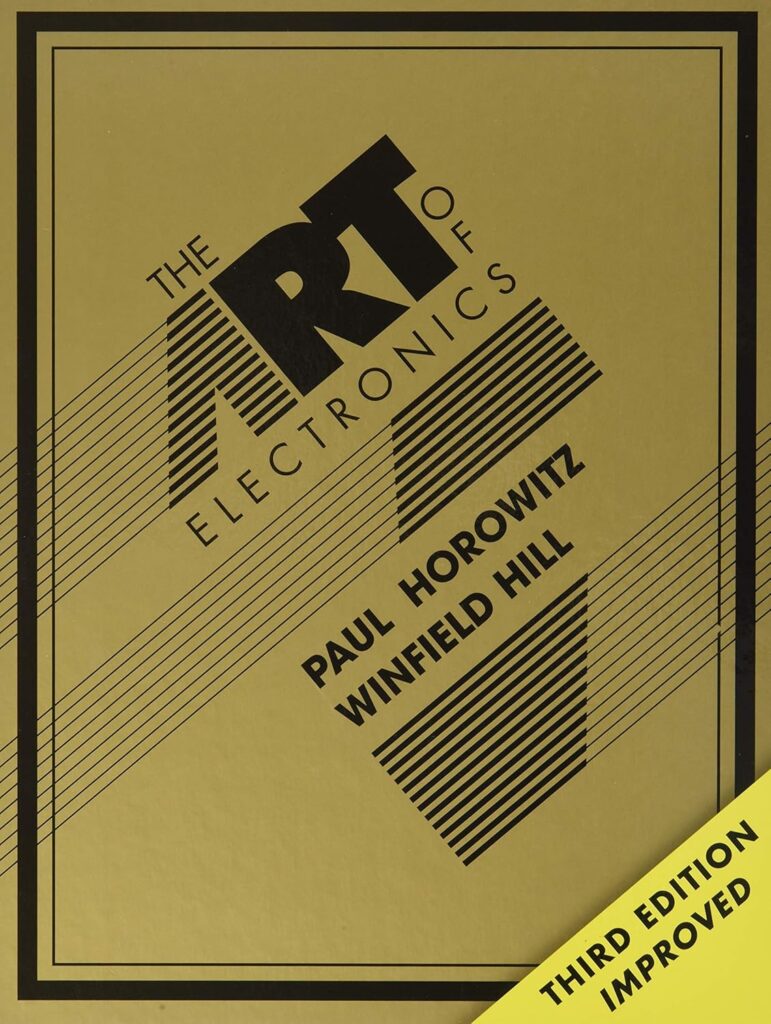


The Art of Electronics: A Reference for Circuit Designers
Few technical books carry the kind of reputation that surrounds The Art of Electronics. Now in its third edition from Cambridge University Press, this substantial volume has long been regarded as a leading authoritative reference on electronic circuit design. The third edition represents a thorough revision and update of the earlier work, and at 1,220 pages it is clearly intended as a comprehensive resource rather than a quick introductory read.
This review looks at what the third edition offers, how it is organized, and who is likely to get the most from it based on the information available about the book itself.
What This Book Is
The Art of Electronics is a book about electronic circuit design. It is published by Cambridge University Press, with the third edition dated March 30, 2015. The book is written in English and runs to 1,220 pages. Its ISBN-10 is 0521809266 and its ISBN-13 is 978-0521809269. Physically, it measures 21 x 6.6 x 29 cm and weighs 2.44 kg, which gives a sense of the scale of the volume: this is a large, dense reference work rather than a pocket guide.
The book has been widely accepted as the best single authoritative book on electronic circuit design. That description comes from the publisher’s own framing of the title, and it reflects the position the book has held across its editions. The third edition builds on that foundation with expanded and updated material rather than a simple reprint.
Design and Structure of the Third Edition
What distinguishes the third edition from its predecessors is not just revised text but the addition of substantial visual and tabular reference material. Three elements stand out in particular.
First, the edition includes 90 oscilloscope screenshots. These illustrate the behavior of working circuits, which means readers can see what circuit behavior actually looks like on an instrument rather than only reading a theoretical description. For anyone trying to connect textbook concepts to what appears on a scope, this is a meaningful addition.
Second, the book contains dozens of graphs presenting measured data. The publisher notes that this is the sort of data often buried or omitted in datasheets but which is needed when designing circuits. That framing positions these graphs as practical design aids rather than academic illustrations.
Third, the edition includes 80 tables listing some 1,650 active components. These tables are intended to enable intelligent choice of circuit components by listing essential characteristics — both specified and measured — of available parts. In practice, this turns the book into something closer to a working reference for component selection, not just a text on theory.
Features and Approach
Beyond the new reference material, the third edition retains what the publisher describes as the feeling of informality and easy access that helped make the earlier editions successful and popular. That matters for a book of this size. A 1,220-page technical reference can easily become intimidating, and the stated goal of keeping the material approachable is part of what has kept the book in use across generations of readers.
The combination of new or enhanced coverage across many topics, alongside the oscilloscope screenshots, measured-data graphs, and component tables, suggests a book that tries to serve two purposes at once: teaching the principles of circuit design and supporting the practical work of designing circuits. The tables of active components and the measured graphs are the clearest evidence of that second purpose.
How It Fits Into Everyday Use
Because this is a reference book rather than a device, “performance” here means how useful the book is as a working resource. The scale of the volume — 2.44 kg and nearly 30 cm tall — means it is not something to carry around casually. It is better suited to a desk or a workbench where it can be kept within reach and consulted as needed.
The inclusion of 80 tables covering roughly 1,650 active components points to a book designed to be opened during actual design work, when a specific part needs to be compared against alternatives. Similarly, the measured-data graphs are described as filling gaps left by datasheets, which suggests they are meant to be consulted when a datasheet alone does not provide what a designer needs.
The oscilloscope screenshots serve a slightly different role. They connect circuit behavior to what is observed on test equipment, which can be useful both when learning and when troubleshooting. Together, these three categories of added material give the third edition a distinctly practical character alongside its explanatory text.
Who Is This Book Best For?
The publisher describes The Art of Electronics as an indispensable reference and the gold standard for anyone — student or researcher, professional or amateur — who works with electronic circuits. That is a broad intended audience, and it is stated directly rather than inferred.
In practical terms, the book’s structure supports several kinds of readers. Students encountering circuit design in a formal setting can use the explanatory material and the oscilloscope screenshots to connect theory with observed behavior. Researchers and professionals who already understand the fundamentals may find the component tables and measured graphs more immediately useful as day-to-day design references. Amateurs and hobbyists working with electronic circuits are also explicitly included in the stated audience.
Because the book is a large and comprehensive reference, readers looking for a short, light introduction may find its scale daunting. Those who want a single authoritative volume to keep on hand for circuit design work are the readers the publisher appears to have in mind.
Final Verdict
The third edition of The Art of Electronics is a thoroughly revised and updated version of a book that has long been treated as a leading authoritative reference on electronic circuit design. Its 1,220 pages, 90 oscilloscope screenshots, dozens of measured-data graphs, and 80 tables covering some 1,650 active components make it a substantial and practically oriented resource. The publisher’s stated aim of retaining an informal, accessible feel is significant for a book of this size, since it addresses the main risk of any large technical reference — that it becomes too dense to use.
For students, researchers, professionals, and amateurs who work with electronic circuits, the third edition presents itself as a comprehensive reference rather than a casual read. Its physical size and weight reflect that role. Anyone seeking a single authoritative volume on circuit design, with both explanatory coverage and practical reference material, will find that this edition is built for exactly that purpose.